
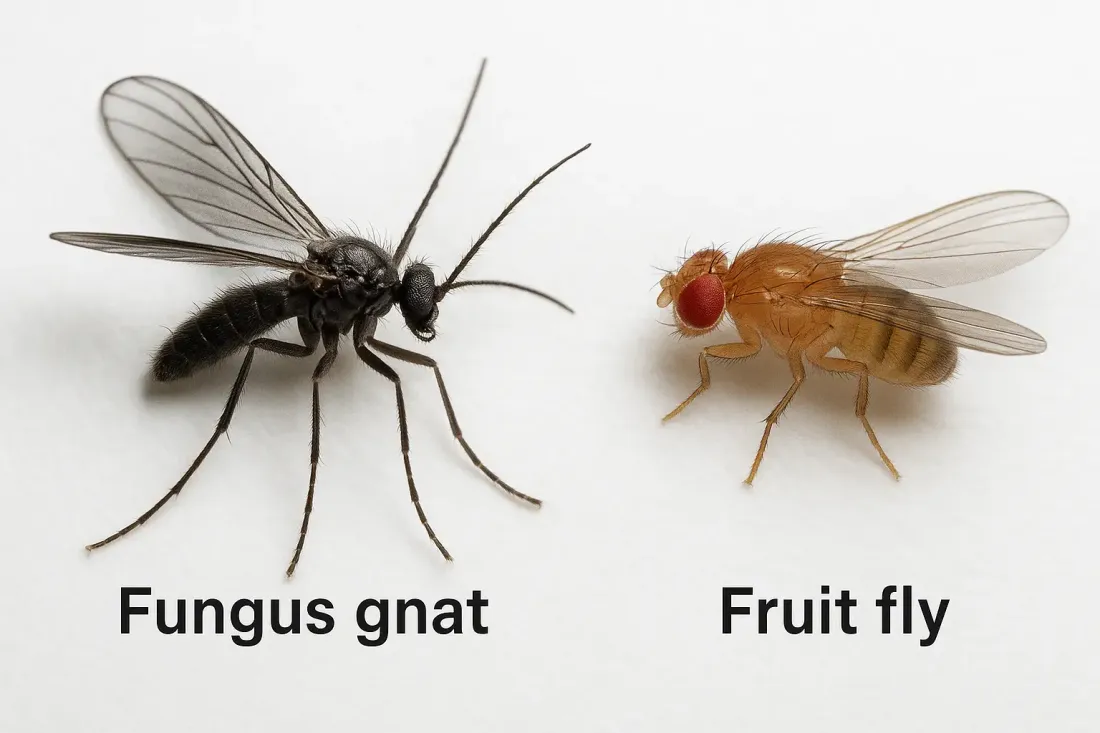
Fungus Gnats vs Fruit Flies: Your South Florida Identification and Elimination Guide
Tiny, buzzing invaders are taking over your kitchen or ruining the peace of your indoor garden. In the humid climate of South Florida, it’s a year-round battle against these pesky flies. But before you swat at them in frustration, know this: the wrong identification leads to the wrong solution. Treating a fruit fly like a gnat is like using a water pistol to put out a grease fire—utterly ineffective. At NaturePest, we believe in empowering Miami-Dade and Broward County families with the knowledge to protect their homes holistically. Let’s clear the air and identify your uninvited guests for good.
Fungus Gnats vs Fruit Flies: At a Glance
This quick comparison table highlights the key differences to help you identify your pest problem instantly.
| Feature | Fungus Gnats | Fruit Flies |
|---|---|---|
| Primary Attraction | Damp soil, organic decay in potted plants | Fermenting fruits, vegetables, sugary liquids |
| Common Color | Dark gray or black with slender bodies | Tan, brownish, or light orange with red eyes |
| Body Shape | Mosquito-like, with long legs and antennae | More rounded, like a miniature house fly |
| Resting Posture | Wings folded flat over the body | Wings often held out or at an angle |
| Movement | Weak, erratic fliers; often run across soil | More robust, direct fliers; hover around food |
| Larvae Habitat | Top 2-3 inches of moist plant soil | On the surface of overripe or rotting fruit |
A Deep Dive into Fungus Gnats
Understanding your enemy is the first step to victory. Fungus gnats are more than just a nuisance; they can be a sign of an underlying issue with your plants.
What Do Fungus Gnats Look Like?
These pests are delicate, dark-winged flies about 1/8 of an inch long. They have long, segmented antennae and legs that make them resemble tiny mosquitoes. You’ll rarely see them flying high; they prefer to hover lazily just over the soil surface of your houseplants or scamper across it.
Where Do Fungus Gnats Thrive?
Their name says it all. Fungus gnat larvae feed on fungi and organic matter that thrive in consistently moist soil. Overwatering your plants is the number one cause of an infestation. They are especially common in homes with many indoor plants and are a frequent issue in the consistently warm, humid environment of South Florida.
Are Fungus Gnats Actually Harmful?
The adults are mostly just annoying. The real threat comes from the larvae. In large numbers, they can begin to feed on plant roots, stunting growth and causing yellowing leaves and wilting—particularly in seedlings and sensitive plants like African Violets. For plant lovers, this is a clear sign to take action.
The Lowdown on Fruit Flies
The classic kitchen pest, fruit flies, are attracted to the sweet smell of fermentation, making your kitchen a five-star resort for them.
Identifying Fruit Flies
Fruit flies are typically a light tan or brown color with distinctive bright red eyes. They are slightly smaller and stouter than fungus gnats. Their flight pattern is more direct and purposeful as they zero in on your bowl of bananas, glass of wine, or a sticky spill on the counter.
Common Fruit Fly Habitats and Breeding Grounds
Anywhere organic matter is fermenting is a potential hotspot. This includes:
- Overripe fruit on countertops
- Unrinsed beer and soda cans in recycling bins
- Kitchen trash cans without tight lids
- Discarded vegetable scraps
- Slow-draining sinks and garbage disposals with built-up grime
The Risks of a Fruit Fly Infestation
While they don’t bite or sting, fruit flies are a significant hygiene concern. They can carry bacteria like E. coli and Salmonella from contaminated surfaces onto your food as they land and feed, potentially spreading foodborne illnesses.
Holistic and Pet-Safe Elimination Strategies
Chemical sprays are a temporary fix and can be harmful to your family, pets, and the environment. We advocate for targeted, intelligent solutions that address the root cause.
How to Get Rid of Fungus Gnats Holistically
- Let the Soil Dry: The most effective method. Allow the top 1-2 inches of soil to dry out completely between waterings. This kills larvae and discourages egg-laying.
- Use Yellow Sticky Traps: Place these horizontally on the soil surface. The bright yellow attracts adult gnats, trapping them and breaking the breeding cycle.
- Drench the Soil with Beneficial Nematodes: These microscopic, naturally occurring worms are a powerhouse of holistic pest control. Added to water, they seek out and destroy gnat larvae in the soil, are completely safe for plants, pets, and people, and provide long-term control.
- Apply a Sand or Gravel Top-Dressing: A half-inch layer of sand or fine gravel on top of the soil prevents adults from laying eggs and traps emerging adults.
How to Get Rid of Fruit Flies Naturally
- The Apple Cider Vinegar Trap: Pour a small amount of apple cider vinegar into a cup and add a drop of dish soap. Cover with plastic wrap and poke small holes. The vinegar attracts them, the soap breaks the surface tension, and they drown.
- Eliminate the Source: This is non-negotiable. Find and discard all overripe produce. Store new fruits and vegetables in the refrigerator.
- Deep Clean: Thoroughly clean kitchen surfaces, take out the trash, and sanitize your garbage disposal. Pouring boiling water mixed with vinegar down the drain can dissolve organic buildup.
- Seal Entry Points: Install fine mesh screens on windows and doors to prevent new flies from entering your South Florida home.
When to Call a Professional Pest Control Expert
If you’ve tried these methods and still face a persistent swarm, it’s time to call in the experts. A large or recurring infestation often indicates a hidden breeding source, like a leak under a sink or a rotten piece of fruit that has rolled behind an appliance. Our experts at NaturePest are trained to find these sources and eliminate them for good. We use safe, targeted methods that align with our commitment to pet-safe pest control for families across Broward and Miami-Dade counties.
A leading authority on Florida pests, the University of Florida IFAS Extension, confirms the importance of source control: “Management of fungus gnats is achieved primarily by cultural practices, especially appropriate water management.” This aligns perfectly with our holistic approach—solve the problem, don’t just spray the symptom.
Proactive Prevention: Keeping the Flies at Bay
An ounce of prevention is worth a pound of cure, especially in our humid climate.
- For Fungus Gnats: Water plants only when needed. Ensure all pots have proper drainage holes. Quarantine and inspect new plants before introducing them to your home.
- For Fruit Flies: Store produce in the fridge or sealed containers. Take out the kitchen trash and recycling regularly. Perform routine deep cleans of kitchen surfaces and drains. A well-sealed home is your first line of defense, something our comprehensive pest-proofing services can help with.
Frequently Asked Questions (FAQs)
What smells do fungus gnats hate?
Fungus gnats are repelled by the strong scents of cinnamon, peppermint, and cedar. A light sprinkle of cinnamon powder on the soil surface can help deter them.
Can fruit flies come from drains?
Yes, they can. Drains and garbage disposals can accumulate slimy organic matter, creating a perfect breeding ground for fruit flies. Regular cleaning is essential.
Are these flies harmful to my pets?
While both flies are not directly harmful (they don’t bite), fruit flies can potentially carry pathogens that could cause an upset stomach if ingested by a curious pet. It’s best to keep pet food bowls clean and covered.
How long do these flies live?
An adult fruit fly lives about 2-3 weeks, while an adult fungus gnat lives about one week. However, their rapid reproductive cycle is what causes populations to explode so quickly.
Don’t let tiny flies disrupt your peace of mind and the sanctity of your South Florida home. You’ve armed yourself with the knowledge; now let us provide the solution. For persistent infestations or for the assurance of a truly fly-free home, the expert team at NaturePest is here to help with safe, effective, and holistic strategies. Schedule your free, no-obligation inspection today by calling us at 786-222-7069 or contacting us online. Let’s protect your home, naturally.


