
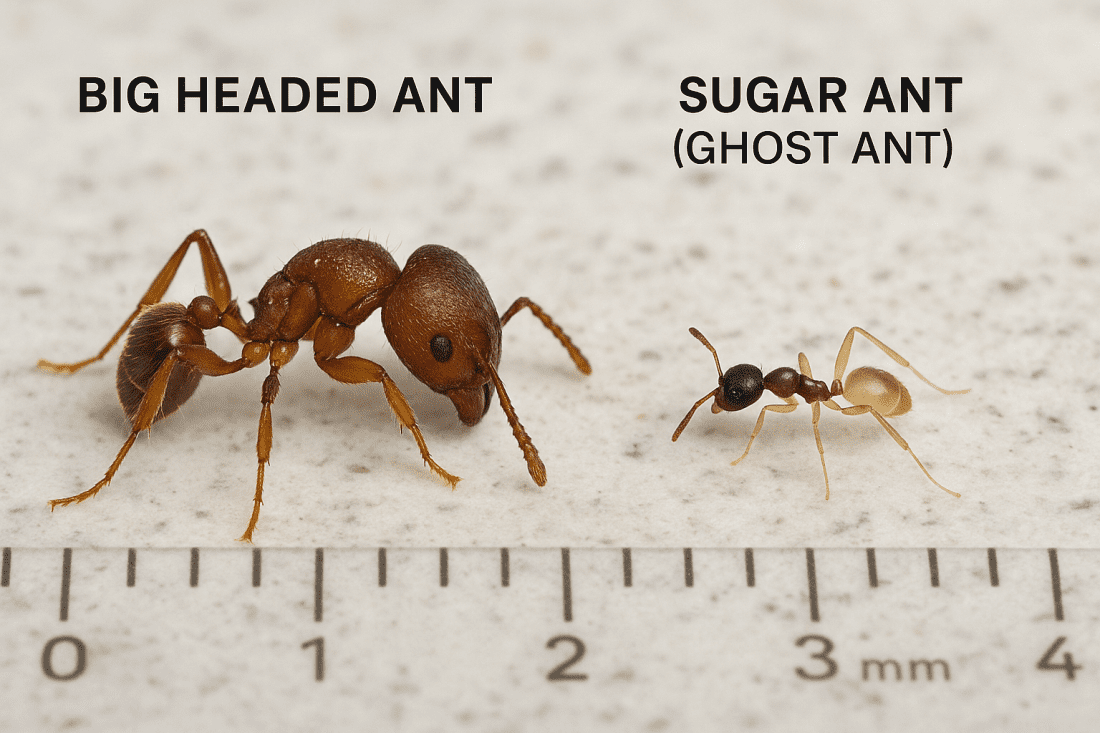
Big Headed Ants vs Sugar Ants: Your South Florida Identification and Control Guide
You pour a bowl of cereal on a peaceful Miami morning, only to find it’s already occupied—by a convoy of tiny ants. In South Florida, this is a common frustration, but not all ants are created equal. Misidentifying your six-legged invaders can lead to failed DIY attempts and prolonged infestations. Understanding the key differences between Big Headed Ants and Sugar Ants is the first step toward implementing a safe, effective, and holistic strategy to reclaim your home.
Why Proper Ant Identification Matters in South Florida
Reaching for a generic spray is a temporary fix. Different ant species have unique behaviors, nesting preferences, and food sources. A treatment that works on one type may be completely ineffective against another. By correctly identifying whether you’re dealing with Big Headed Ants or Sugar Ants, you can target your approach, saving time, money, and frustration while ensuring you use the safest methods for your family and pets in Broward and Miami-Dade counties.
How to Identify Sugar Ants (Ghost Ants)
What most Floridians call “Sugar Ants” are most often Ghost Ants (Tapinoma melanocephalum).
- Appearance: Tiny, about 1/16th of an inch long. They have a dark head and thorax with a pale, almost translucent abdomen and legs. This makes them notoriously difficult to see—hence the name “ghost.”
- Behavior: They give off a faint, rotten coconut odor when crushed. They form massive colonies with multiple queens and are highly opportunistic.
- Nesting Sites: Prefer moist areas. Outdoors, they nest in leaf litter, under logs, or in plant cavities. Indoors, they’ll happily nest in wall voids, behind baseboards, or in potted plants.
- Diet: As their nickname suggests, they have a strong preference for sweets but will also feed on greases and proteins.
How to Identify Big Headed Ants (Pheidole spp.)
Big Headed Ants are a common genus in Florida, with Pheidole megacephala being a notable species.
- Appearance: They exhibit clear polymorphism, meaning there are two distinct worker types: minor workers and major workers. The major workers have disproportionately large, powerful heads compared to their bodies, which they use to crack seeds and defend the colony.
- Behavior: They create well-defined, sandy mounds that can damage root systems and undermine pavement. They are often seen in wide, meandering trails.
- Nesting Sites: Primarily soil nesters. They build their colonies in sunny, open areas of yards, under rocks, and next to foundations. They less commonly nest indoors unless there is a significant moisture issue.
- Diet: They prefer proteins and fats (like pet food and insects) but will also forage for sweets.
Side-by-Side: Big Headed Ants vs. Sugar Ants
| Feature | Sugar Ants (Ghost Ants) | Big Headed Ants |
|---|---|---|
| Size | Very small (1/16″) | Minor workers small, Major workers large-headed |
| Color | Dark head, transparent abdomen & legs | Light brown to reddish-brown |
| Key Identifier | Tiny, “ghost-like” appearance | Two distinct worker sizes with major workers having huge heads |
| Nest Location | Moist areas indoors & outdoors | Sandy soil mounds outdoors |
| Primary Diet | Sweets | Proteins & Fats (will eat sweets) |
| Colony Structure | Multiple queens, very large colonies | Single queen, large colonies |
Holistic Prevention: How to Deter Ants Naturally
The best ant control is prevention. Making your home less attractive is a safe and effective first line of defense.
- Eliminate Food Sources: Wipe down counters, sweep floors, and store food in airtight containers. Don’t leave pet food out overnight. Rinse recycling containers before placing them in the bin.
- Seal Entry Points: Use caulk to seal cracks and crevices around windows, doors, and utility pipes. This is a core part of our pest proofing philosophy.
- Manage Moisture: Fix leaky faucets and ensure downspouts direct water away from your home’s foundation. Avoid overwatering indoor plants.
- Create a Dry Barrier: Keep mulch and landscaping debris at least 6 inches away from your home’s foundation to discourage nesting.
- Natural Deterrents: Wiping surfaces with vinegar or peppermint oil can disrupt scent trails and deter foraging ants.
When Prevention Isn’t Enough: Safe and Effective Elimination
If you already have an established colony, prevention alone won’t solve the problem. DIY solutions often kill the visible foragers but leave the hidden colony—and the queen—untouched, leading to a quick rebound.
For Sugar Ants, baits are highly effective. The workers take the bait back to the multiple queens and nests, gradually eliminating the entire network. For Big Headed Ants, targeted treatments around their outdoor mounds and trails are necessary.
As experts from the University of Florida IFAS Extension note, successful control requires patience and the right approach: “Ant management requires patience and follow-up. Non-repellent insecticides and baits are often more effective than repellent sprays because the ants cannot detect them and will readily cross treated areas.” This aligns with our use of low-toxicity, targeted holistic pest control methods at NaturePest.
Our technicians are trained to identify the specific ant species plaguing your home. We then use EPA-approved, pet-safe products and strategies that target the colony at its source, providing lasting relief without compromising your family’s health or the South Florida environment.
Frequently Asked Questions
Q: Are sugar ants in Florida dangerous? A: Ghost Ants (“sugar ants”) are not considered dangerous as they don’t sting and rarely bite. However, they can contaminate food and are a significant nuisance. Big Headed Ants can bite if handled but are not medically significant.
Q: Can I use the same bait for both big headed ants and sugar ants? A: Not ideally. While both may accept a sweet bait, Big Headed Ants have a stronger preference for protein-based baits. Using the wrong bait is a common reason DIY efforts fail. A professional can select the perfect bait for your specific ant problem.
Q: Why do I have ants even though my house is clean? A: Ants are opportunistic and can be attracted to things beyond food crumbs, including moisture from a leaky pipe, aphids on your houseplants, or even the scent of pet food. A single scout ant can lead a whole colony inside.
Q: Are your ant control treatments safe for my pets and children? A: Absolutely. Our number one priority is the safety of your family and pets. We specialize in pet safe pest control and use targeted, holistic methods with minimal downtime. We will provide specific instructions to ensure everyone’s safety during and after treatment.
Don’t let ants make you feel like a stranger in your own home. You deserve peace of mind and a pest-free living space. If you’re tired of playing guessing games with ant identification and ineffective solutions, the experts at NaturePest are here to help. We’ll accurately identify the pest, locate the source, and implement a safe, effective plan tailored to your South Florida home. Call us today at 786-222-7069 or contact us online for a free, no-obligation quote.

