
Are Paper Wasps Dangerous? A South Florida Guide to Safe Coexistence
The distinctive, umbrella-shaped nest hanging from your eaves. The elegant, long-legged insects circling your porch light. If you live in South Florida, paper wasps are a familiar part of the landscape. Their sudden appearance often triggers a spike of anxiety, leading to one pressing question: are these insects a dangerous threat to my family? The answer is more nuanced than a simple yes or no. While their sting is potent, paper wasps are not the mindless aggressors they’re often made out to be. At NaturePest, we believe in informed coexistence and safe, holistic intervention when necessary. This guide will help you understand paper wasp behavior, assess the real risk they pose, and provide the knowledge you need to keep your South Florida home safe.
Paper Wasp 101: Identification and Behavior
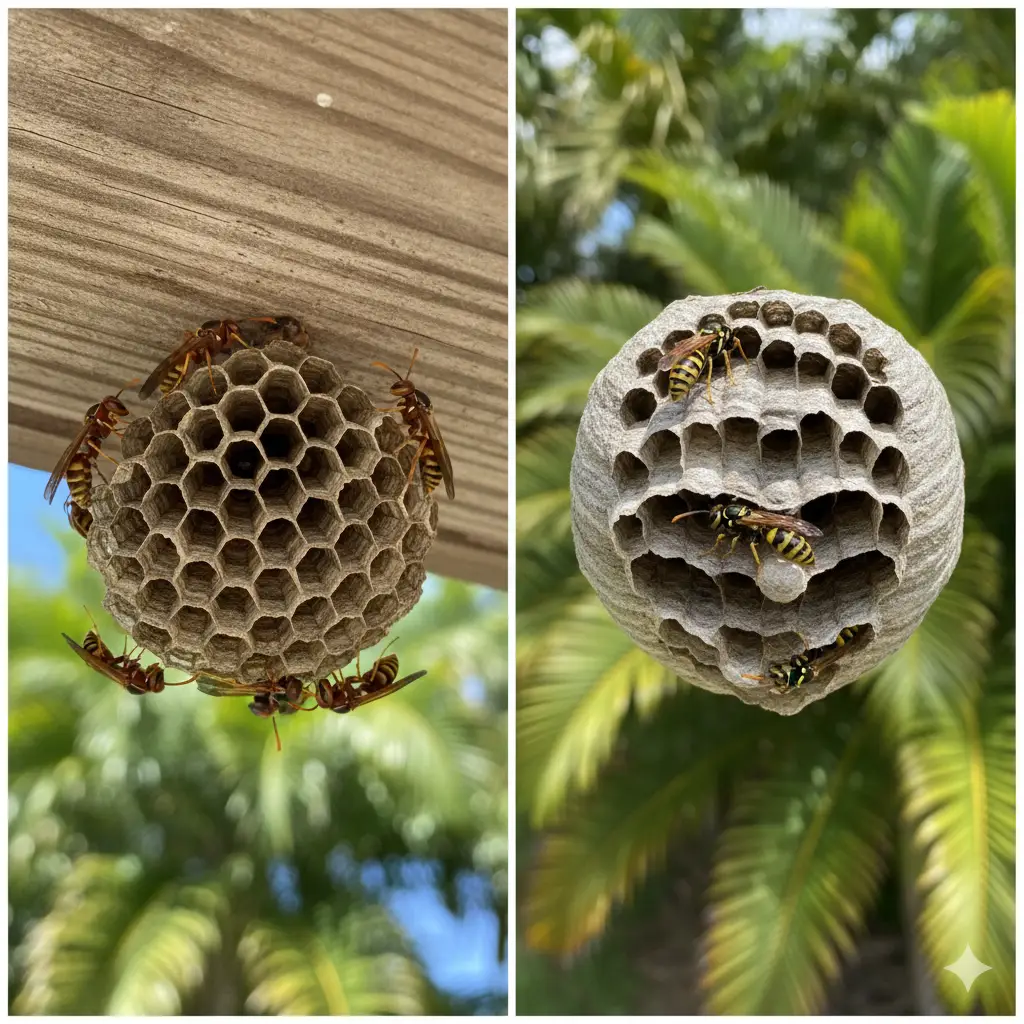
First, let’s identify your resident wasps. Paper wasps (Polistes spp.) are slender with narrow waists, long legs that dangle in flight, and typically exhibit brownish coloration with yellow or reddish markings. Their most defining feature is their nest: a single, open-combed layer that resembles an upside-down umbrella, often attached to protected areas like door frames, eaves, window sills, and porch ceilings.
Unlike social wasps like yellowjackets, paper wasps are less aggressive by nature. They are beneficial pollinators and predators, feeding on nectar and controlling populations of caterpillars and other garden pests that can damage your landscaping.
A key resource from the University of Florida IFAS Extension notes: “Paper wasps are considered beneficial because they feed on caterpillars and other plant-feeding insects. However, their tendency to nest on homes and their willingness to defend their nests can make them a potential health hazard.” This perfectly encapsulates the dual nature of these insects. Source: UF/IFAS Entomology Department
So, Are Paper Wasps Actually Dangerous?
The “danger” posed by a paper wasp is almost entirely contingent on the proximity of their nest to human activity and how that nest is approached.
They are generally NOT dangerous if:
- Their nest is in an unused, high-traffic area of your property (e.g., deep in a shrub, on a remote shed).
- They are foraging away from their nest. Solo wasps are not defensive.
- You do not disturb their nest. They will not go out of their way to attack.
They CAN become dangerous if:
- Their nest is located near a doorway, mailbox, play structure, or patio—any high-traffic area.
- The nest is accidentally disturbed by vibrations (e.g., from a lawnmower), sudden movement, or a curious pet.
- Someone in your household has a known wasp sting allergy, in which case any sting can be life-threatening.
Their sting is painful and can cause swelling and redness. For allergic individuals, a sting can trigger anaphylaxis, which is a medical emergency.
Paper Wasp vs. Yellowjacket: Knowing the Difference is Key
Many people confuse paper wasps with the more aggressive yellowjackets. Knowing the difference is crucial for assessing threat level and response.
| Feature | Paper Wasp | Yellowjacket |
|---|---|---|
| Nest | Open comb, umbrella-shaped, often single-layered. | Enclosed paper nest, usually in ground voids or wall cavities. |
| Body | Slender with a narrow waist; long, dangling legs. | Stocky with a thick waist; shorter legs. |
| Behavior | Less aggressive. Defends nest but usually must be provoked. | Highly aggressive. Will defend nest territory unprovoked. |
| Diet | Predators of insects (caterpillars); also nectar. | Scavengers; attracted to proteins and sugars (BBQs, trash). |
Holistic Prevention and Safe DIY Removal
The best strategy is to make your property less attractive to nesting wasps in the first place.
Prevention Tips:
- Early Season Patrol: In early spring, conduct weekly checks of common nesting sites (eaves, porch ceilings, sheds). A nest with just a few queens is much easier to remove.
- Seal Entry Points: Repair tears in window screens and seal cracks and crevices in your home’s exterior to prevent wasps from entering attics or wall voids to build nests.
- Use Decoy Nests: Some homeowners have success hanging commercial or homemade “decoy” wasp nests, as wasps are territorial and may avoid areas they believe are already occupied.
Safe Removal of Small, Accessible Nests:
If the nest is small (golf ball size) and easily reachable, you can consider this at your own risk:
- Wait until dusk or night when wasps are less active and all have returned to the nest.
- Wear protective clothing: long sleeves, pants, gloves, goggles, and a hat.
- Use a wasp-specific spray that allows you to stand at a safe distance. Always follow label instructions.
- Do not use a ladder. If you need a ladder to reach the nest, the risk of falling is greater than the risk from the wasps. Stop and call a professional.
When to Immediately Call a Professional Wasp Exterminator
DIY removal is never worth the risk in these scenarios. Contact NaturePest immediately if:
- The nest is large (tennis ball size or larger).
- The nest is in a wall void, attic, gutter, or any enclosed space.
- The nest is in a high-traffic area (front door, porch, deck).
- You or a family member has a known allergy to stings.
- You are simply uncomfortable or unsure.
Our wasp control experts use safe, targeted methods to eliminate the threat. We prioritize the removal of the nest to prevent future colonies from using the same location, a key part of our holistic pest control approach. For recurring problems, our home pest control plans provide ongoing monitoring and protection.
Frequently Asked Questions About Paper Wasps
What should I do if I get stung by a paper wasp?
Wash the area with soap and water to remove venom. Apply a cold pack to reduce swelling and pain. Over-the-counter pain relievers and antihistamines can help manage symptoms. Seek immediate medical attention if you experience signs of an allergic reaction: difficulty breathing, swelling of the face/throat, dizziness, or a rapid heartbeat.
Do paper wasps reuse their nests?
No. Paper wasps do not reuse their old nests. However, the weathered, sheltered spot where an old nest was attached can remain highly attractive to new, founding queens the following spring. It is recommended to scrape away old nest remnants and consider sealing or painting over the area to disrupt the scent trail.
Are paper wasps beneficial to have around?
Yes, they are. Paper wasps are voracious predators of garden pests, particularly caterpillars that can damage ornamental plants and vegetables. If a nest is in a low-traffic area of your yard, tolerating it can provide free, natural pest control.
What’s the safest way to get rid of a paper wasp nest?
The absolute safest way is to hire a professional. At NaturePest, we have the protective equipment, experience, and appropriate insecticides to remove nests quickly and safely, often without needing to use high-volume sprays that can affect non-target insects. We also offer pet-safe pest control options for concerned homeowners.
Don’t gamble with your safety. If a paper wasp nest is too close for comfort, our professional and safe removal service is just a phone call away. Protect your family and enjoy your outdoor space in peace. Call NaturePest at 786-222-7069 or contact us online for immediate assistance. We serve all of South Florida, including Miami-Dade and Broward Counties.

