
When to Treat for Armyworms in Florida Lawns: A Holistic Guide
One of the most devastating sights for a Florida homeowner is the sudden appearance of large, brown patches spreading across a once-lush lawn. Often, the culprit is the armyworm, a voracious pest that can seemingly overnight. In South Florida’s warm climate, armyworms are a year-round threat, but their attacks peak at specific times. Treating at the right time is the difference between a quick recovery and a total lawn loss. At NaturePest, we believe in a smart, holistic approach that protects your lawn, your family, and the local ecosystem. This guide will help you identify, understand, and take action against armyworms at the most effective time.
The Armyworm Lifecycle: Why Timing is Everything
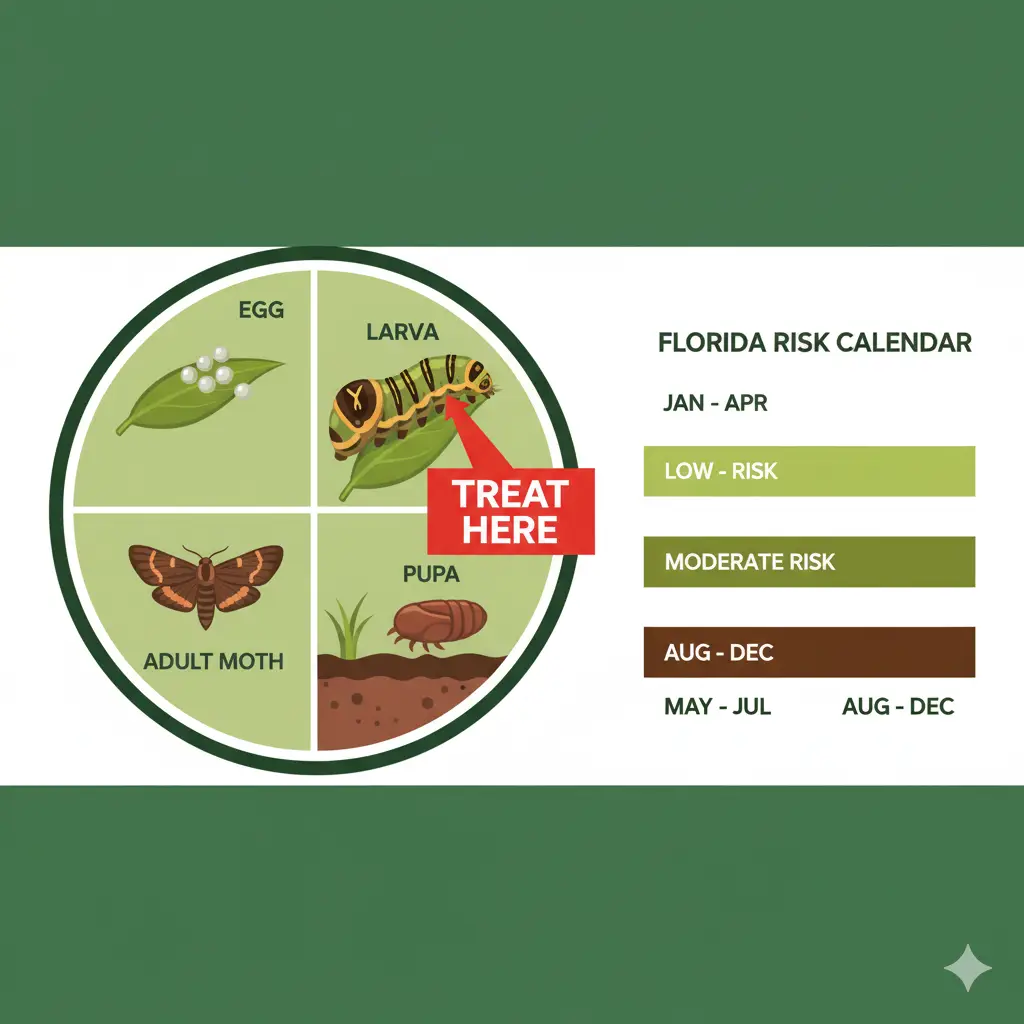
Understanding the enemy’s schedule is your first strategic advantage. The armyworm lifecycle is rapid, especially in the heat of a South Florida summer.
- Egg Stage: Moths lay masses of eggs on grass blades, often near light sources. These hatch in just 2-3 days.
- Larval Stage (The Destructive Phase): This is the “worm” stage, lasting 2-3 weeks. They feed relentlessly, growing through 6 instars. This is the only stage where treatment is effective.
- Pupal Stage: Larvae burrow into the soil to pupate for 7-10 days. They are invulnerable to treatments during this stage.
- Adult Stage: The moth emerges to restart the cycle. A single generation can be completed in as little as 4 weeks, leading to 4-6 overlapping generations per year in Florida.
The key to control is targeting the young larval stages before they cause extensive damage and before they pupate.
How to Identify an Armyworm Infestation in Your Lawn
Catching an infestation early is critical. Look for these tell-tale signs:
- Brown Patches: Sudden appearing irregular brown areas that spread rapidly.
- “Window-paning”: Grass blades are eaten down to the veins, giving them a transparent, skeletal look.
- Visible Larvae: The worms themselves are green, brown, or black with distinct stripes along their body and an inverted “Y” on their head. They are most active in the early morning or late evening.
- Increased Bird Activity: Birds, especially grackles and egrets, love to feed on armyworm larvae. A flock of birds feasting on your lawn is a major red flag.
- The “Soap Test”: Mix 1-2 ounces of lemon-scented dish soap in a gallon of water and pour it over a 2×2 foot area of brown grass. This will irritate the worms and bring them to the surface within 10 minutes, confirming their presence.
The Golden Window: When to Treat for Armyworms in Florida
The absolute best time to treat is when you first notice damage and confirm the presence of young larvae. Waiting even a few days can allow the population to explode.
- Seasonal Timing: While possible year-round, peak outbreaks typically occur in late summer and fall (August – November), when populations build to their highest levels.
- Daily Timing: Apply treatments in the early morning or late evening when armyworms are most active and feeding. Avoid the heat of the day.
- Lifecycle Timing: Treat when larvae are small (less than ¾ inch long). Larger larvae are harder to kill and have already done significant damage.
If you see damage spreading daily, this is a lawn emergency. Contact our emergency lawn care service for immediate intervention.
Holistic Treatment and Prevention Strategies
Our approach goes beyond a one-time spray to create a resilient, healthy lawn that can resist future invasions.
Treatment Options
| Method | How it Works | Best For |
|---|---|---|
| Organic/Biological | Bacillus thuringiensis (Bt) is a natural soil bacteria that specifically targets caterpillar larvae. Safe for pets, people, and pollinators. | Early-stage infestations, preventative applications, homes with pets and children. |
| Botanical Insecticides | Neem Oil acts as an antifeedant and growth regulator. It disrupts the larvae’s ability to eat and grow. | Moderate infestations when a stronger organic option is needed. |
| Chemical Insecticides | Professional-Grade Insecticides like bifenthrin provide a quick knockdown for severe, fast-moving outbreaks. | Large-scale, severe infestations where rapid control is critical to save the lawn. |
Long-Term Prevention
- Healthy Lawn Practices: A thick, healthy lawn is the best defense. Mow at the recommended height for your grass type (e.g., 3.5-4 inches for St. Augustine), water deeply but infrequently, and practice grasscycling to return nutrients to the soil.
- Monitor Regularly: Keep an eye on your lawn, especially during peak season. The sooner you find them, the easier they are to control.
- Manage Night Lights: Since moths are attracted to lights, consider turning off unnecessary outdoor lighting during peak season or switching to yellow “bug” bulbs.
For a customized lawn care plan that includes preventative monitoring, contact our specialists.
Lawn Recovery: After the Armyworms Are Gone
Once the infestation is controlled, your lawn needs help to recover.
- Water Deeply: Help the surviving grass roots recover from stress.
- Apply a Light Fertilization: A balanced, slow-release fertilizer will encourage healthy regrowth.
- Reseed or Resod: For areas of complete destruction, you may need to reseed or lay new sod once the threat is gone.
- Continue Monitoring: Keep an eye out for a second wave, as multiple generations can overlap.
FAQs: Armyworm Control in South Florida
Q1: Can I treat for armyworms at any time of day? No. For the most effective results, treat in the early morning or late evening. This is when armyworms are most active and feeding on the grass blades, which means they will directly ingest the treatment.
Q2: Will grub control also kill armyworms? No. Grub controls and armyworm treatments are different pesticides. Grubs are beetles larvae that live in the soil, while armyworms are caterpillar larvae that live on the grass blades. You need a product specifically labeled for “caterpillars” or “armyworms.”
Q3: Is it too late to treat if my lawn is already mostly brown? Not necessarily. Check the “soap test” to see if live larvae are still present. If they are, you must treat to stop them from killing the crown (growing point) of the grass and moving to new areas. If the crown is still alive, your lawn can often recover with proper care and watering after treatment.
Q4: Why should I choose NaturePest’s holistic approach over a standard lawn spray? We don’t just kill the current problem; we help you build a defense for the future. Our focus on holistic pest control means we use the most targeted, least impactful methods first, and we provide expert advice on lawn health to prevent recurring issues, saving you time and money in the long run.
Don’t Let Armyworms March Through Your Lawn
Time is of the essence with these pests. Waiting can mean the difference between a simple treatment and a costly lawn replacement.
If you see signs of armyworms in your South Florida lawn, act now. For expert identification, precise timing, and effective treatment, call NaturePest at 786-222-7069 or contact us online for a consultation.

